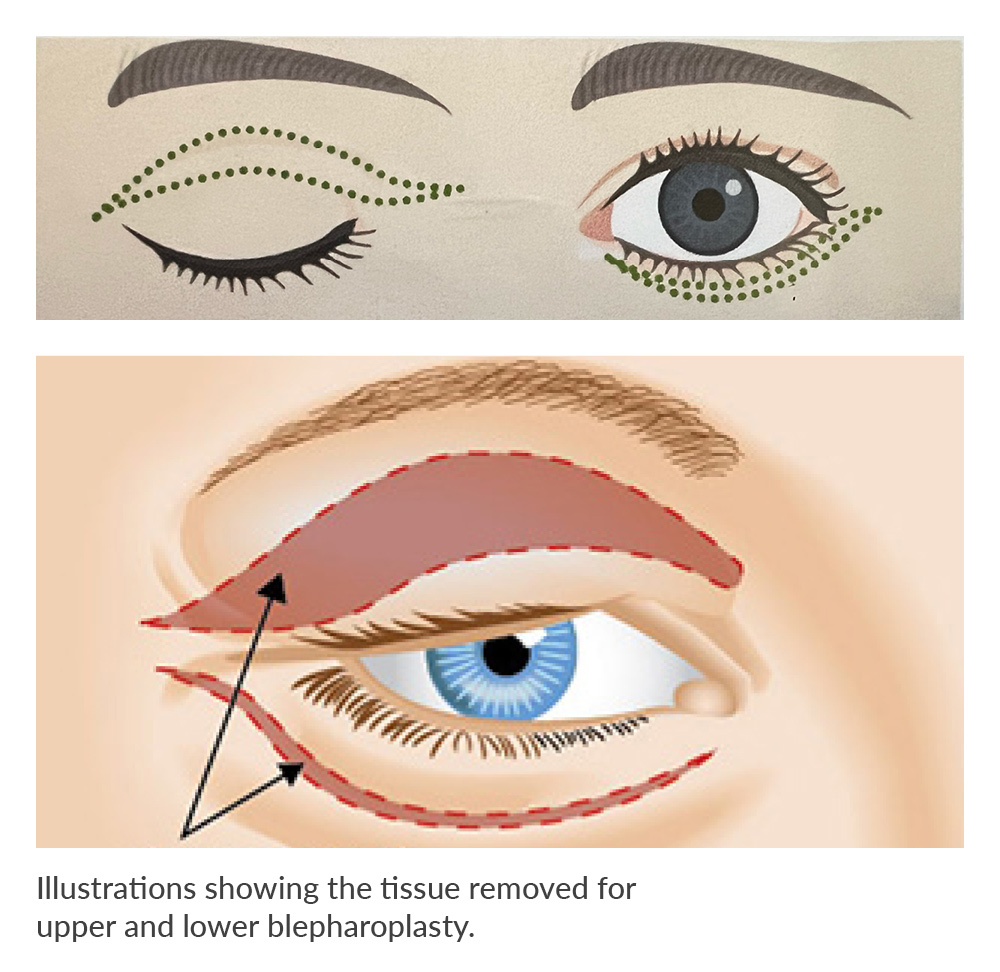
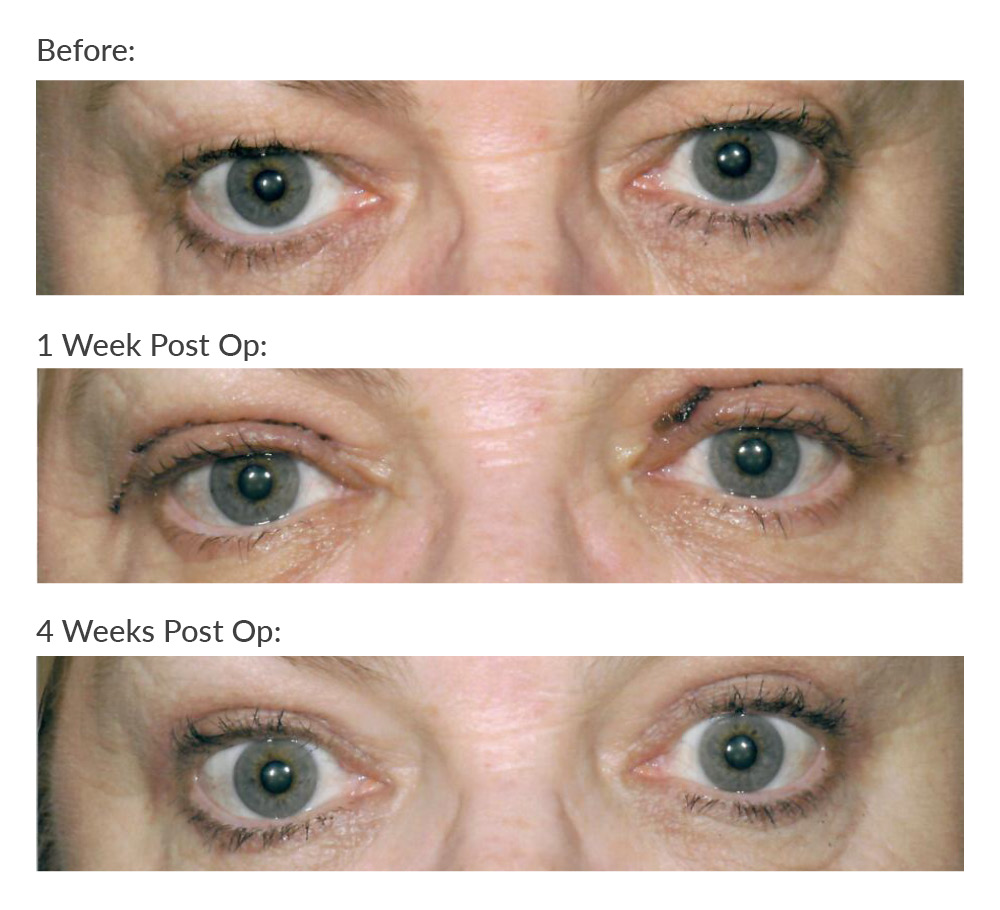
It is important that a thorough knowledge of anatomy is undertaken and this is why a Specialist Ophthalmic Surgeon is better suited to undertake this type of procedure.
The advantage of having a Specialist Ophthalmic Surgeon doing the procedure is that your eye health is checked before any procedure is undertaken. This includes checking your vision, looking at the health of your eyes and in particular testing for dry eye, which can be exacerbated after the procedure. This occurs because the blinking mechanism is interfered with during surgery and takes time to recover. If you have dry eye before the surgery, this can worsen after the surgery and this is therefore important to make sure this is assessed properly. Even if you don’t have dry eye prior to surgery you may feel some grittiness afterwards and need lubricants. Lagophathalmos or the inability to close the eyelids needs to be checked prior to surgery to avoid any postoperative disasters caused by the inability to keep the eyelids closed. This means not too much skin can be taken at the time of surgery and therefore the experience of a Specialist Ophthalmic Surgeon is advantageous.
A Specialist Ophthalmic Surgeon such as Dr Hollenbach will be go through the protocol for making sure your eyes stay comfortable after the procedure.
A Specialist Ophthalmic Surgeon is again the ideal surgeon to do a lower lid Blepharoplasty as there have been too many instances where lower lid Blepharoplasties have led to pulling out of the lower lids referred to as Ectropion due to too much skin having been removed. This is often very difficult to correct and it is very important that an experienced surgeon performs the procedure such as Dr Hollenbach, as they generally know how much skin is safe to take.
If fullness or puffiness under the eyes is the primary concern, this surgery can be performed through the inside of the eyelids without the need to remove any skin.